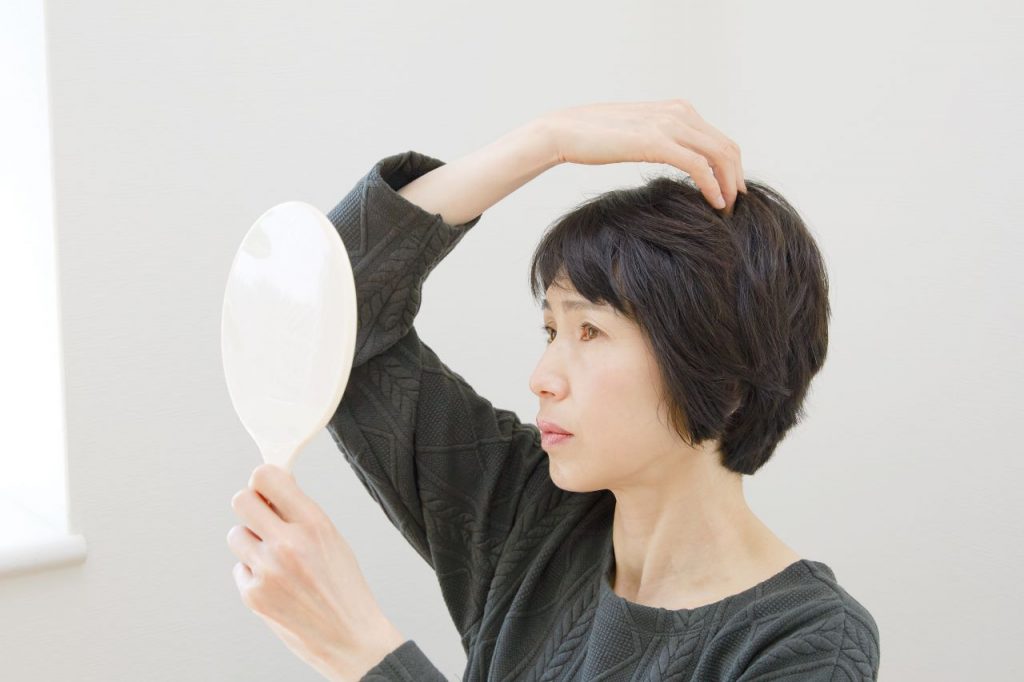
Many health conditions cause temporary or permanent hair loss. The imbalance of reproductive hormones and the influx of male hormones that cause polycystic ovary syndrome (PCOS) for instance sees up to 30% of sufferers experiencing significant hair loss or thinning.
One life stage that causes similar hormonal imbalances has a very similar outcome. Menopause is an event that’s unavoidable for women everywhere, and unbeknown to most, can trigger hair loss and thinness.
In this blog post, we answer the common questions surrounding menopausal hair loss, so those affected can find the solutions they’ve been searching for.
Hormones affect the body in all kinds of weird and wonderful ways. Hormones fluctuate at various stages throughout a woman’s life cycle, causing the onset of puberty and facilitating just the right conditions to nurture life during pregnancy.
During the menopausal years, hormones estrogen and progesterone decrease whilst the presence of male hormone androgen increases. It’s these male hormones that cause the shrinking of hair follicles, a process that can cause menopausal hair loss of varying degrees.
The hormonal changes you experience during menopause may cause hair growth in some places whilst triggering thinning and hair loss in others.
Menopausal hair loss generally presents itself on the head, with the crown, front hairline and nape the areas predominantly affected. Menopausal hair loss and thinning are therefore particularly noticeable if you’re a fan of pulled back or parted hairstyles.
One of the biggest questions those suffering from menopausal hair loss have is whether the hair loss and thinning they are experiencing is here to stay. Flo answers this very query and offers the advice you need to help your hair recover a little quicker:
“But will it grow back? The answer is yes, but there are also things that can help the body along. Wash hair regularly (every two to three days) with a mild shampoo. Treat hair gently. Don’t comb or brush hair when it’s wet. Using the fingers to detangle is a gentler option. Putting hair up in a tight bun or ponytail can cause added stress on the hair and its follicles. Finally, try to limit the use of hair dryers or irons on hair, as they can dry and damage it.”
Treating menopausal hair loss, or at least aiding the recovery of follicles, comes down to more than just the physical.
Your stress levels can exacerbate menopausal hair loss and thinness, which makes keeping them in check vital. Use meditation, breathing exercises, yoga and other relaxation techniques to keep stress to a minimum.
Exercise is another important factor when combating menopausal hair loss. Regular exercise can be used to manage a long list of menopause symptoms. It will enhance sleep quality and quantity, improve weight management and reduce stress to help your body cope with hormone imbalances and prevent hair loss.
Changing your diet can also help you reduce and treat menopausal hair loss. Bolster meals with hair strengthening proteins; hormone regulating, healthy fats; and hair loss reducing vitamins and minerals. Zinc, iron, selenium, copper, calcium, magnesium, and vitamins A, B, C and D are all essential when tackling menopausal hair loss.
Treating your natural hair gently is another must. But if hair loss and thinning worsen, adopting a protective style courtesy of a wig will help you combat menopausal hair loss whilst rocking a natural looking, healthy head of hair.
Shop our range of women’s synthetic wigs and human hair wigs today to discover all you need to conceal and overcome menopausal hair loss.
